How to Get Canine Kidneys Working Again
Acute Renal Failure: Symptoms, Diagnosis and Treatment
The kidneys perform many vital functions, including the removal of various toxins from the body. These toxins are waste products from normal cell functions.
When kidneys fail, they can no longer remove these toxins. "Acute" renal (kidney) failure means that the trouble adult relatively speedily.
Causes
Many things can cause acute kidney failure. Certain poisons are well known for their power to damage the kidney. These poisons include:
- Antifreeze (radiator fluid, ethylene glycol)
- Lily plants (cats only)
- Raisins and grapes
- Sure drugs, including pain pills such equally aspirin or ibuprofen (Advil® or Motrin®)
Astringent infections in the kidney from bacteria can cause sudden kidney failure. Although kidney infections tin can occur spontaneously, usually there is a preexisting status that reduces an animal'due south ability to fight infection hands – such as kidney stones, partial urine blockage or chronic kidney disease.
Leptospirosis is a bacterial infection (Leptospira spp.) that can cause acute kidney failure in dogs, but very rarely in cats. Dogs get leptospirosis from urine or h2o contaminated past infected animals (deer, cattle, rats, raccoons, mice or other dogs).
Anything that decreases blood period through the kidney can cause kidney failure. This includes aridity from any cause (such every bit severe vomiting and diarrhea). Heatstroke or other disorders causing massive damage to body tissues, such as bee stings or snakebites, tin can also pb to kidney failure.
Symptoms
Dogs or cats with acute kidney failure may accept a diverseness of clinical signs.
Symptoms of kidney failure include:
Early Stages
- Excessive thirst
- Urine volume
Later Stages
- Lethargy
- Poor or absent appetite
- Vomiting
- In astringent kidney failure, the amount of urine may actually decrease, or the pet may end making urine birthday. Stomach or abdominal ulcers may develop which will result in either a black or tarry stool or vomiting of digested claret (which looks like coffee grounds).
Diagnosis
Blood and urine tests are used to diagnose acute kidney failure and to assess the severity of affliction. Other tests, such every bit radiographs (X-rays), ultrasound and special blood tests are usually necessary to help determine what might have caused the kidney failure. Sometimes a biopsy of the kidney is recommended.
Nonetheless, the crusade of kidney failure is not always easily discovered and may never be adamant.
Treatment
- IV Fluids: the initial handling for acute kidney failure is intravenous (IV) fluids. These fluids are used to restore expert hydration and to flush out the substances that the kidneys should be removing from the bloodstream. Urine production is monitored throughout the IV fluid therapy as a subtract in urine can betoken the need for other therapies.
- Medications: in addition to fluid treatment, other medications are commonly used. Antibiotics are given if the crusade of the kidney failure is known or suspected to be infection. More medications may exist required depending on the clinical status of the patient.
- Temporary Feeding Tube: because kidney failure drains the body's resource, and pets with kidney failure often refuse to consume, a temporary feeding tube may be recommended.
- Careful Monitoring: the clinical status of dogs and cats with astute kidney failure can change speedily. Conscientious monitoring is necessary. This may include repeatedly checking blood pressure, torso weight, electrocardiogram and blood tests. It may too be necessary to place a urinary catheter to measure urine book.
Potassium
Potassium is an electrolyte normally constitute in the claret in low levels. With acute kidney failure, potassium levels may increase to dangerous levels, different in chronic kidney failure when levels tend to decrease. The increased potassium level slows the heartbeat and can cause the heart to stop. Alternatively, very high claret pressure level could too develop because of the kidney failure, so claret pressure level medication is frequently needed. High claret pressure can crusade blood vessels in the eye or brain to burst.
Fluid Retention
Fluid retention may occur if urine product is less than Iv fluid input. This may manifest itself as increased torso weight, abdomen bloating, bloated legs, or shortness of breath if fluid builds up in the lungs.
Advanced Therapies
Not all animals with acute kidney failure will respond to Four fluids. Advanced therapies such every bit peritoneal dialysis or hemodialysis may be necessary. Signs that indicate these therapies should be considered include:
- Dangerously high potassium level
- Fluid in the lungs
- Lack of improvement in laboratory results while a patient receives Four fluids
Peritoneal Dialysis
Peritoneal dialysis involves placing a tube direct into the belly cavity then pushing fluid into the belly, which is later drained out.
This flushes out many toxins the kidneys are declining to remove. Initially, this procedure requires a dr. or nurse 24 hours a solar day to keep flushing the fluid in and out. Unfortunately, even in the best of circumstances, complications such as infection around the tube and clogging of the tube are frequent after only a few days.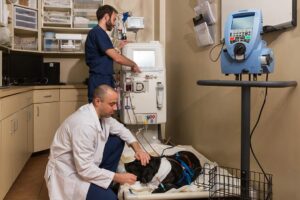
Hemodialysis
Hemodialysis involves putting a large 4 catheter in a vein and using the catheter to remove a quantity of claret, which is then sent through a machine that cleans the blood. Hemodialysis is effective, but just a handful of veterinarian hospitals are equipped to do hemodialysis. Both peritoneal dialysis and hemodialysis are very expensive handling options.
Prognosis
Despite all the advances in the handling of acute kidney failure, it remains a serious and often fatal disease. About 60% of dogs and cats with this illness either dice or are humanely euthanized because of failure to respond to supportive care.
Dialysis is commonly reserved for those patients in whom medical handling has failed, and the chance of decease without dialysis is about 100%. In those patients, l% may recover with dialysis, depending on the underlying cause of kidney failure.
Even in patients that recover from acute kidney failure, the recovery may be incomplete, leaving the patient with chronic kidney disease that volition require life-long ongoing care.
For more data on this subject, speak with the veterinarian that's treating your pet.
Source: https://bluepearlvet.com/medical-articles-for-pet-owners/acute-renal-failure-in-dogs/

Post a Comment for "How to Get Canine Kidneys Working Again"